
What is the impact of staff members keeping a hidden disability a secret in the workplace? Managing Director of Bascule Disability Training, Chris Jay offers guidance on developing a workplace culture that encourages openness…
Being open about a disability is essential for any worker who needs their employer to make reasonable adjustments. But what if workers fear that their employer might not be supportive? What if they are worried that colleagues might react negatively or offer unwanted attention or sympathy? What if they have a suspicion that their progress may be hampered if they reveal they have a disability?
The short answer is- these people will hide it. Unfortunately, the impact of doing this can be negative, and detrimental to mental and physical health, as well as a person’s general wellbeing.
How do you hide a disability?
To many people, the act of keeping disability a secret might sound unlikely or almost impossible, and this is mainly due to our perceptions of what disability is, or more importantly, what we believe disability ‘looks like’. As we all know, the universal symbol of disability is the icon of a wheelchair user, but in actual fact only a small percentage (believed to be less than 8%1), of people with a disability are wheelchair users.
It’s actually estimated that around 80% of all disabilities are non-visible2, and so this means that roughly 11 million people have disabilities they are able to conceal, therefore a vast number of workers will be in a position where they make a conscious decision of whether or not, to be open about their disability in their workplace. Sadly, it’s estimated that as many as 43% of people with hidden disabilities choose to keep them a secret from their employer3.
What is a ‘hidden disability’?
Put simply, a hidden disability is a disability that is not immediately apparent to other people. These can include a vast variety of impairments including visual and auditory disabilities, ADHD, dyslexia, diabetes, asthma, Crohn’s Disease, chronic pain, depression, bipolar, epilepsy, dyspraxia, rheumatoid arthritis- to mention just a small number.
Unlike visible disabilities, hidden disabilities do not have any obvious physical signs, and this can often cause misunderstandings and confusion amongst coworkers with little or no awareness of disability, which can also lead to the needs of individuals being overlooked by managerial staff.
The health implications of concealing a disability
It goes without saying, that people with disabilities are under no legal obligation or requirement to reveal, or be open about their disability, and if it is their wish to keep it to themselves, they have every right to. However, there is an abundance of evidence that shows that this is likely to, not only impact performance, but health too. One area it has a noticeable impact on is stress levels.
Coping with stress has become a part of working in the modern world, and as a result of a faster pace of living, stress is said to impact as many as 79% of all UK adults for at least one day every working month4, and 7% of people say they feel stressed every single day5.
Stress has been proven to take its toll on the body, physically exacerbating issues such as headaches, breathing problems, nausea, pain, digestive problems and depression. Many of these are also symptoms of a number of hidden disabilities, meaning the physical challenges of having a disability will be compounded or enhanced by concealing it. If a person is already in a job where pressure and stress is commonly experienced, maintaining this role and hiding a disability will certainly enhance the difficulties stress already evokes.
For example, consider someone who has chosen not to openly reveal that they are diabetic. Imagine that they are caught in a long all-day meeting, and that stopping to eat, or take medicine, may appear to be inappropriate in these conditions, despite it being essential for them and their health. As well as being a health risk, stress levels and anxiety will rise, and their job will become more difficult as a result. However, if the person’s diabetes is known about, simple adequate adjustments can be provided for this person.
Consider also, a staff member who has chosen to conceal a chronic pain condition. They may need occasional breaks, or they may struggle with timings on certain days. Without an understanding of this, an employer may misinterpret a person’s symptoms for poor behaviour- which will lead to disciplinary action, adding pressures to the staff member and pushing them to work through the difficult and challenging times an employer would otherwise support them through. This would again, enhance symptoms and raise stress levels. The business might then have to deal with the awkward situation of someone revealing a disability they have been forced to reveal during a disciplinary process.
As well as increasing stress, hiding a non-visible disability also impacts feelings of sadness, nervousness, isolation and anxiety. This was demonstrated in an American study that found that employees who do reveal their disability are more than twice as likely to feel happy or content at work than those who do not (65% versus 27%). They are also less likely to regularly feel nervous or anxious (18% versus 40%) or isolated (8% versus 37%)6.
So, with so many serious implications to health and wellbeing, why do people continue to hide their disabilities?
Why hide?
If staff choose to hide their disability, it is nearly always an indication that an organisation needs to improve its cultural approach to creating a more inclusive workplace. If disability and difference is genuinely embraced, and meaningful steps are taken towards creating an accessible organisation, people are much more likely to freely and openly discuss their own disability.
When Bupa investigated the most common reasons for not revealing a disability, 30% of respondents said it was because they didn’t want to cause a fuss with colleagues, 25% didn’t want to be treated differently and 23% said they had worries that they would not be believed7.
All three of these reasons demonstrate an issue in terms of how disability is perceived by people. The key issues are built around the attitudes, reactions and perceptions of colleagues and managers, meaning the most important step forward is developing an improved awareness and understanding of disability.
Developing Awareness
Disability awareness training allows members of staff to develop a more positive understanding of disability by raising confidence and removing any barriers that may exist. This should be done by educating all staff members (and provided as onboarding training), at all levels of the company hierarchy. The content should challenge perceptions and consider various issues such as etiquette, correct use of language, communication, hidden disabilities, and inclusive behaviour, as well as legislation, disclosure, reasonable adjustments, and adapting the physical environment.
Training managerial staff is particularly important as awareness and understanding of disability will be fed down to all other staff, which will result in a more inclusive and supportive workplace culture. The impact of training has been known to have an immediate effect, as in the past, our programmes have prompted people to reveal their hidden disability for the first time, in the knowledge that the company has evidently made new efforts to embrace inclusivity.
Losing the ‘D’ word
One way to encourage more staff members to be open about their disability, is to use an alternative to the word ‘disclosure’. This word implies that disability is a dark secret, or something to be confessed. It suggests that disability is a bad thing, but with an open and inclusive workplace culture that celebrates difference, secrecy won’t ever be necessary. Instead of using this terminology, try sentences like ‘helping you to bring your best self to work’. This sets out the stall for a much more open, positive and supportive culture.
Further improvements
Other ways openness around disability can be improved is by demonstrating the success of others with disabilities. This can be done by asking staff to be the subject of HR case studies, that clearly exemplify the support the organisation has shown, when staff are open about a hidden disability. These should evidence how the company has made reasonable adjustments to fully support them, empowering them to be a healthier, happier, more productive individual.
Consider disability steering groups that are comprised of staff in all teams, across various seniority levels and give these parties a voice in all company movements. Change recruitment policies, improve accessibility physically and digitally, adapt your services for people with disabilities and watch the cultural shift gradually resonate, and make more staff feel comfortable in being open about their own disabilities. You could survey staff, and ask them
how well are they supported? What can be improved? Ask people if you are getting it right.
Once they understand that you care, there will be a shift in their perception of their employer’s priorities.
References
- Source: CSR Europe, ‘Disability: facts and figures’
- UK Parliament – Invisible Disabilities in Education and Employment-
- Bupa- Employees avoid telling employers about less visible disabilities | Bupa Group
- Workplace stress statistics in the UK (ciphr.com)
- Workplace stress statistics in the UK (ciphr.com)
- Disabilities and Inclusion (Global and U.S. Findings) (talentinnovation.org)
- Employees avoid telling employers about less visible disabilities | Bupa Group
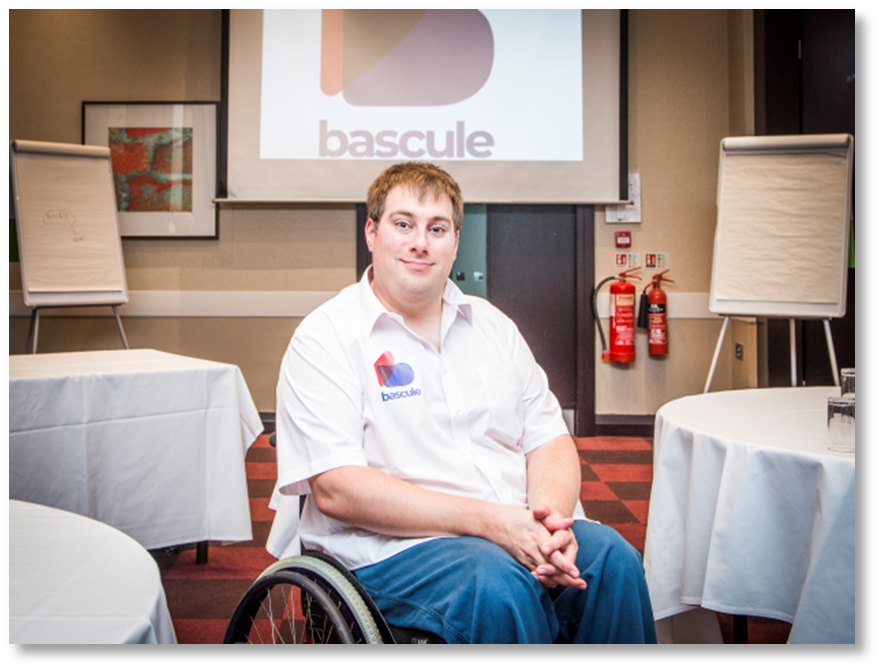
Chris Jay | LinkedIn | Managing Director Bascule Disability Training
www.bascule.com
Born with cerebral palsy, Chris has been a wheelchair user for over 25 years. He has used his life experience of having a disability to create a social enterprise that offers training to help organisations understand the true benefits of being more inclusive. He is an accomplished entrepreneur, training facilitator, public speaker, guest spokesperson and writer on the topic of disability awareness in business.

Share