Why getting OH right is not just about ingredients, but also about method, timing, and knowing your oven.
Who Is Doing The Baking?
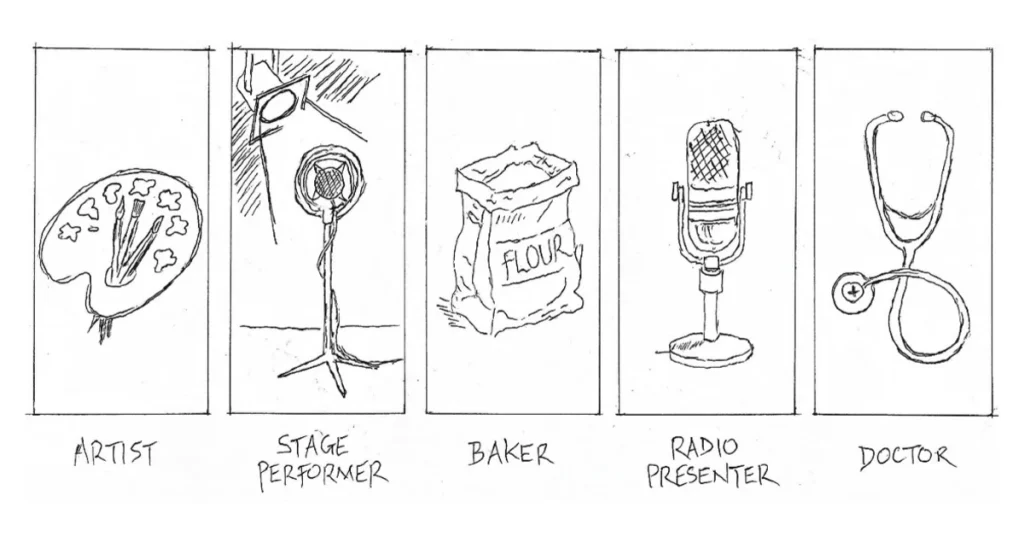
At a primary school careers roadshow recently, I was asked to talk about what I do. I did not start with OH. I started with who I am. An artist, a stage performer, a radio presenter, and a baker, who also happens to be an Occupational Health (OH) doctor. Not because the medicine is not important, but because none of those things are separable. They are all, equally, me.
I am as passionate about every one of them as I am about the clinical work. They shape how I think, how I listen, and how I assess. The performer’s instinct for reading a room. The artist’s eye for what is missing from the frame. The broadcaster’s habit of asking the question behind the question. The baker’s understanding that method matters as much as ingredients. Which is how I found myself, on a Saturday afternoon, standing in the kitchen with two children and a bag of flour, thinking about OH.
In The Kitchen
My daughter measured the flour with laser focus. My son dumped in the eggs with gleeful abandon. As the batter came together, I watched them stir. Too fast at first, then too slow, ingredients swirling but not quite blending. The oven timer ticked. Later, when we bit into the results, some cupcakes rose perfectly. Others sank in the middle. It was messy, joyful chaos. And a near-perfect mirror for what I see every day in practice.
Managing people at work when health challenges arise is exactly as much about the sum of small, thoughtful parts as baking is. Success rarely comes from grand gestures. It emerges from getting the basics right. The right ingredients, the right method, the right conditions. In the right order. With enough time.
Which brings me to cupcakes. Everyone thinks they can bake a cupcake. That is rather the point of a cupcake. It is approachable. It does not require specialist techniques, specialist equipment, or a lengthy, technically demanding process. It is not a croquembouche. It does not require a water bath or a sugar thermometer or three days of laminated pastry. It is twelve small cakes in a tin. How hard can it be?
If you have spent more than ten minutes in OH, you will already see where this is going. OH gets the cupcake treatment all the time. A quick referral, a tick-box assessment, a letter with “fit for work with reasonable adjustments” templated in from a previous case, and off we go. Easy. Done. Piece of cake, in fact. Except the cupcakes came out flat. Or the centres are raw. Or they looked perfect at ten minutes but collapsed the moment they hit the cooling rack. And nobody quite knows why, because they followed the recipe.
Here is the problem I see. Following the recipe is not the same as baking well. And in OH, that distinction costs people their jobs, their health, and sometimes their careers. The failure is not usually dramatic. It is quiet. It is the ingredient that got left out because nobody thought it mattered. It is the method rushed because time was tight. It is the oven temperature never checked because the environment was assumed to be neutral. It is the timing forced by an admin deadline rather than actual recovery.
The Mise En Place Problem
Any decent pastry chef will tell you that the most important part of baking happens before you touch a single ingredient. Mise en place. Everything in its place. You weigh and measure before you begin. You read the whole recipe, not just the bit you are on. You make sure your butter is at room temperature, not cold from the fridge because someone assumed it would not matter.
In OH, the equivalent is preparation: reading the referral properly, understanding the job role before the consultation, knowing what the workplace looks like. Not the job title, the job. There is an enormous difference between “warehouse operative” and what a warehouse operative does across a twelve-hour shift in February in an unheated distribution centre with a repetitive upper-limb disorder.
How often do we walk into an assessment having read only as far as the presenting complaint? The referrer has told us someone has low back pain and has been off for six weeks. We have seen a hundred cases of low back pain. We know what to do. The butter goes in cold, and we carry on. Preparation is not administrative overhead. It is clinical time. The five minutes spent reading a job description properly before a consultation routinely surfaces the detail that changes the entire management plan. Treat it as such.
The Skipped Ingredients
Let us talk about what goes into a cupcake assessment. Not the headline stuff, not the diagnosis and the functional limitations, because clinicians generally do that part. It is the supporting cast that gets left on the counter.
The workplace conditions. Not just what the person can do, but what the environment is asking of them. The psychosocial factors, the relationship with the line manager, the reason they have been off before, the thing nobody wrote in the referral. The feasibility of the adjustments being recommended, whether the “reasonable adjustment” is possible in this workplace, in this team, with this manager. And the employee’s own view of what will work, which is routinely the most useful ingredient in the whole assessment and routinely the one most absent from the final report.
Each of these is an ingredient. Leave one out and the bake is compromised. Not always obviously, not always immediately, but it will show. An adjustment plan built without understanding the line management relationship is a cupcake without baking powder. It will not rise, no matter how much you want it to.
The Unchecked Oven Temperature
What is the thing about cupcakes that people often forget? The oven. It is not a neutral container. It is an active participant. A recipe tested in a fan oven at 180°C will behave very differently in a conventional oven that runs fifteen degrees hot, or in an oven with a broken seal that loses heat through the door.
The workplace is the oven. And we spend an extraordinary amount of time assessing the individual, including their functional capacity, their psychological readiness and their fitness to return, while paying relatively little attention to whether the environment they are returning to is set to the right temperature. A phased return to an unsupportive manager is a cupcake in a faulty oven. The conditions will undermine everything else you have done correctly. The employee will struggle. They may go off sick again. The referrer will say OH’s recommendations did not work. But the recommendations were not the problem, the oven was.
We assess the person extensively. We assess the workplace far less. That imbalance is where a lot of OH plans quietly fail. This requires us to be honest about the limits of what a clinical assessment, conducted without a workplace visit or a meaningful conversation with the line manager, can tell us. We are, in those cases, estimating oven temperature by looking at the outside of the door. Sometimes we get lucky. Sometimes we do not.
A Brief Note On Proofing, And Why Cupcakes Cannot Skip It
Stay with may for a minute. You are right that cupcakes do not proof. That is precisely why they are used to illustrate the problem. Cupcakes are the format people choose when they want baking without the waiting. No proving, no overnight resting, no patience required. And they can be quick, if everything else is right. But some of the chemistry still needs time. The oven must reach temperature before anything goes in. The cases must be filled consistently. The timing cannot be rushed without affecting the result.
OH has a proofing problem even when we convince ourselves there is nothing to proof. Recovery from a significant mental health episode does not happen on a four-week timeline because that is when the sick note runs out. A musculoskeletal condition that has been building for two years will not be resolved by six sessions of physiotherapy, however good the physiotherapist. The bake is not done just because someone feels ready to open the oven door.
Premature return is the collapsed cupcake. It looked done. The timer went off. But the centre was not set, and the moment pressure was applied, the first difficult shift, the first confrontational meeting, the first time the manager forgot about the phased return plan, it fell. The question is not “when are they ready to go back?” The question is “what does readiness look like for this person, in this role, in this workplace?” Those are different questions. The second one takes longer to answer and is worth asking.
The Recipe Versus The Method
Most OH services have a recipe. Referral form, triage, consultation, report, recommendations, follow-up. It is on the process map. It is in the service specification. It works, in the sense that it produces an output. But the recipe is not the method. The method is what you do with the recipe, the judgment calls that do not appear in writing anywhere, the experience that tells you this batter needs one more fold, that this case needs a post-consultation call to the line manager with the employee’s knowledge and consent.
The method is the clinical craft. And it cannot be systemised out of existence, which is what happens when services run high volumes with low time, when consultations are a set duration regardless of complexity, when every report goes through the same template because it is efficient. Efficiency is not the enemy. But the assumption that a standardised recipe produces a standardised quality of outcome is where we get into trouble. The best bakers use the recipe as a framework, not a constraint.
The Soggy Bottom. Sadly It Is Underdone
The soggy bottom is the closed case that was not ready to be closed. The signed-off return to work that everyone knew was optimistic, but nobody said so out loud. The report that concluded “no further OH input required” six weeks before the person went off sick again with the same presentation. It happens for understandable reasons. Caseload pressure. Referrer expectation. The sense that if someone is technically capable of returning, the clinical role is complete. The discomfort of saying, in a report that will be read by HR and a line manager and possibly an employment tribunal, that this is not done yet. Paul Hollywood would not sign off a soggy bottom because everyone else at the table was hungry. And yet. Signing off a case that is not ready does not reduce the caseload. It doubles it. You will see them again in two months.
The Over-Mixed Batter. The Intervention Has Become The Problem
Over-mixing is a genuine failure mode. Once you have developed too much gluten, there is no way back. The texture is ruined and more mixing only makes it worse. The solution is to stop. Or more precisely, to know when to fold gently, deliberately, until just combined, rather than keep beating. Some OH cases get over-mixed. Multiple referrals. Sequential recommendations that slightly contradict the previous ones. Physiotherapy, then psychology, then ergonomics, then a second physician opinion, then a welfare meeting or case conference. Each intervention individually defensible. Collectively, a signal to the employee that nobody knows what they are doing, and to the employer that this case is unsolvable. Part of the clinical skill is knowing when the plan is complete enough, and more input will not improve it. Sometimes the kindest and most effective thing is a clear, final formulation. Here is what is wrong, here is what will help, here is what the workplace needs to do. And then stop mixing.
The Icing On The Cake. Finishing Strong Without Covering Up
Then there is the icing. My children applied it with enormous generosity. thick, uneven, enthusiastic. It covered the sinkholes beautifully. You would never know, looking at those cupcakes, that the centres had sunk.
Workplaces ice over problems too. Temporary cover, extra training, wellness perks, team away-days. They are all applied with good intentions over cases where the underlying bake was never right. The icing is not dishonest, exactly. It is just doing a job the cake should be doing.
I see this in my OH clinic regularly. The employee on their fourth phased return in two years, each one accompanied by a new suite of adjustments, none of which address the fact that the role itself is incompatible with their condition. There could be a job–person mismatch. The work, the environment, or the demands of the role do not fit the person’s health needs, yet we keep adding adjustments instead of asking whether the role should change, whether the person should move, or whether a different solution is needed. Then there is the wellbeing programme rolled out across a team whose manager is the source of half the referrals and the EAP referral made instead of the difficult conversation.
Icing has its place. Use it for morale, for recognition, for the genuine finishing touches that make a good bake better. But it cannot substitute for the cake. If you are reaching for the icing before the fundamentals are right, something went wrong earlier in the process, and more icing will not fix it.
So, Is OH A Piece Of Cake?
Only if you think baking is just about following a recipe. But we know that is not true. It is the whole bake. Good OH happens when the preparation is right, when all the ingredients are present, when the workplace conditions have been accounted for, when the timing reflects actual recovery rather than administrative convenience, when the method is applied with judgment rather than just the recipe. When the clinician knows not to over-mix, knows what a soggy bottom looks like before it leaves the tin, and knows the difference between icing a problem and solving one.
In those conditions, good OH becomes reliably achievable. It is not simple. But it is doable. The kind of bake that comes out right not because of luck, but because of everything that happened before the oven door closed. Good cupcakes are within reach. They just are not always as easy as they look. And anyone who tells you otherwise has probably never had to explain a collapsed one to a referrer.
AI Use Statement:
Microsoft Copilot used for spelling, grammar, and punctuation errors. All content was verified by the author. All ideas, interpretations and conclusions are the author’s own.

Dr Robert Olubi | LinkedIn
OH Physician and Global Medical Advisor
VitalCheck Wellness